
Commercial Window Film
Commercial Anti-Glare Window Film
Eliminate screen washout and harsh sun glare in offices and commercial spaces — without sacrificing natural light.
Everything You Need to Know
Click any section below to jump straight to what you need.
Core Benefits
UV, heat, glare, and added privacy.
Jump to Section 02Types of Film
Carbon, infrared, and nano-ceramic tiers.
Jump to Section 03Light Transmission Guide
VLT from 5% to 70%, tier by tier.
Jump to Section 04Installation Process
How a commercial install actually runs.
Jump to Section 05Warranty
Manufacturer and craftsmanship coverage.
Jump to Section 06FAQs
Straight answers for facility managers.
Jump to SectionThe Core Benefits of Anti-Glare Film
UV Protection
Blocks 99.9% of UV rays, protecting furniture, flooring, artwork, and stored materials from the fading that ages an interior years ahead of schedule.
Get a Free Quote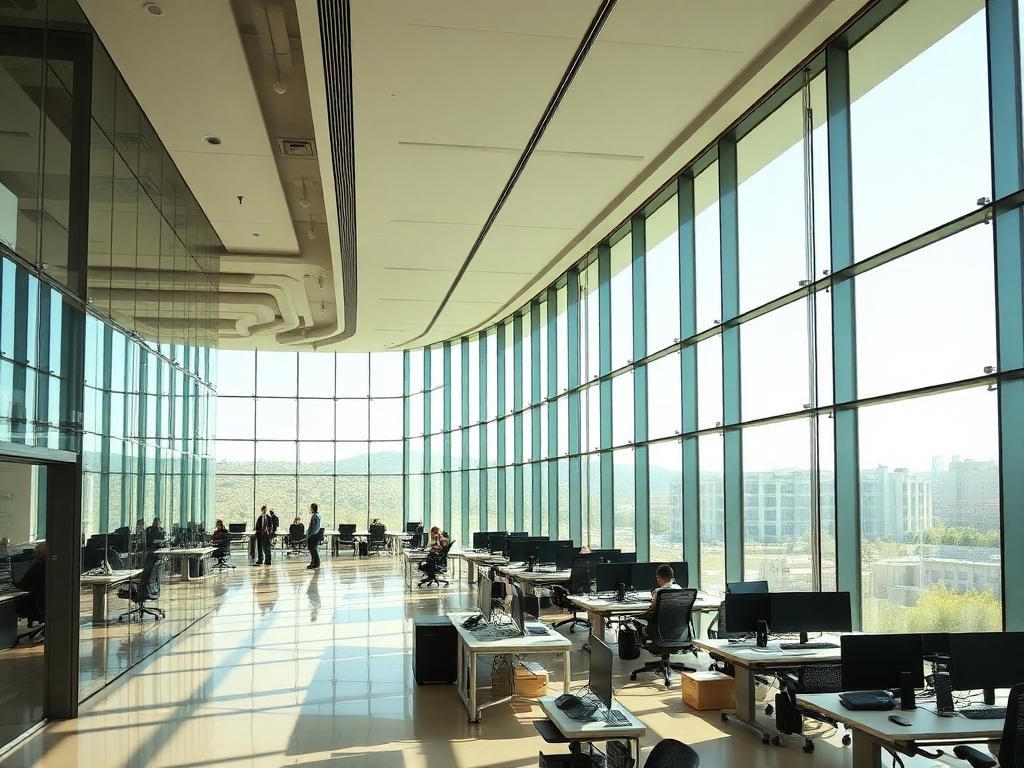
Heat Reduction
Infrared rejection cuts the solar heat entering through glass, evening out hot desks near the windows and easing peak load on the cooling system.
Get a Free Quote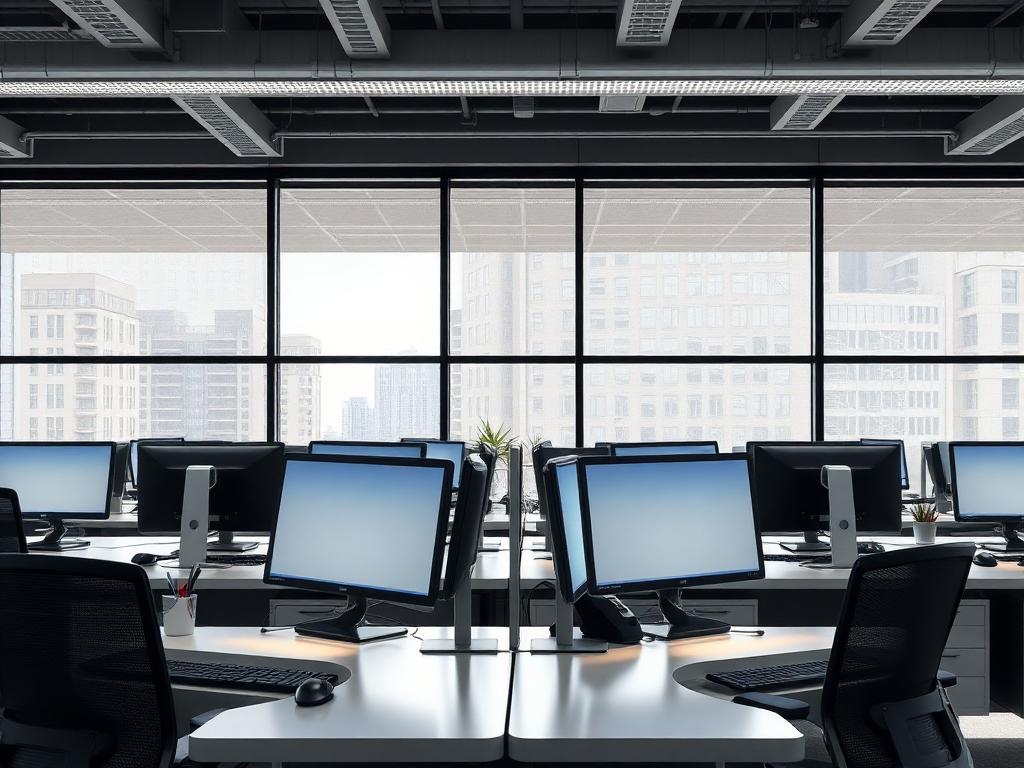
Glare Control
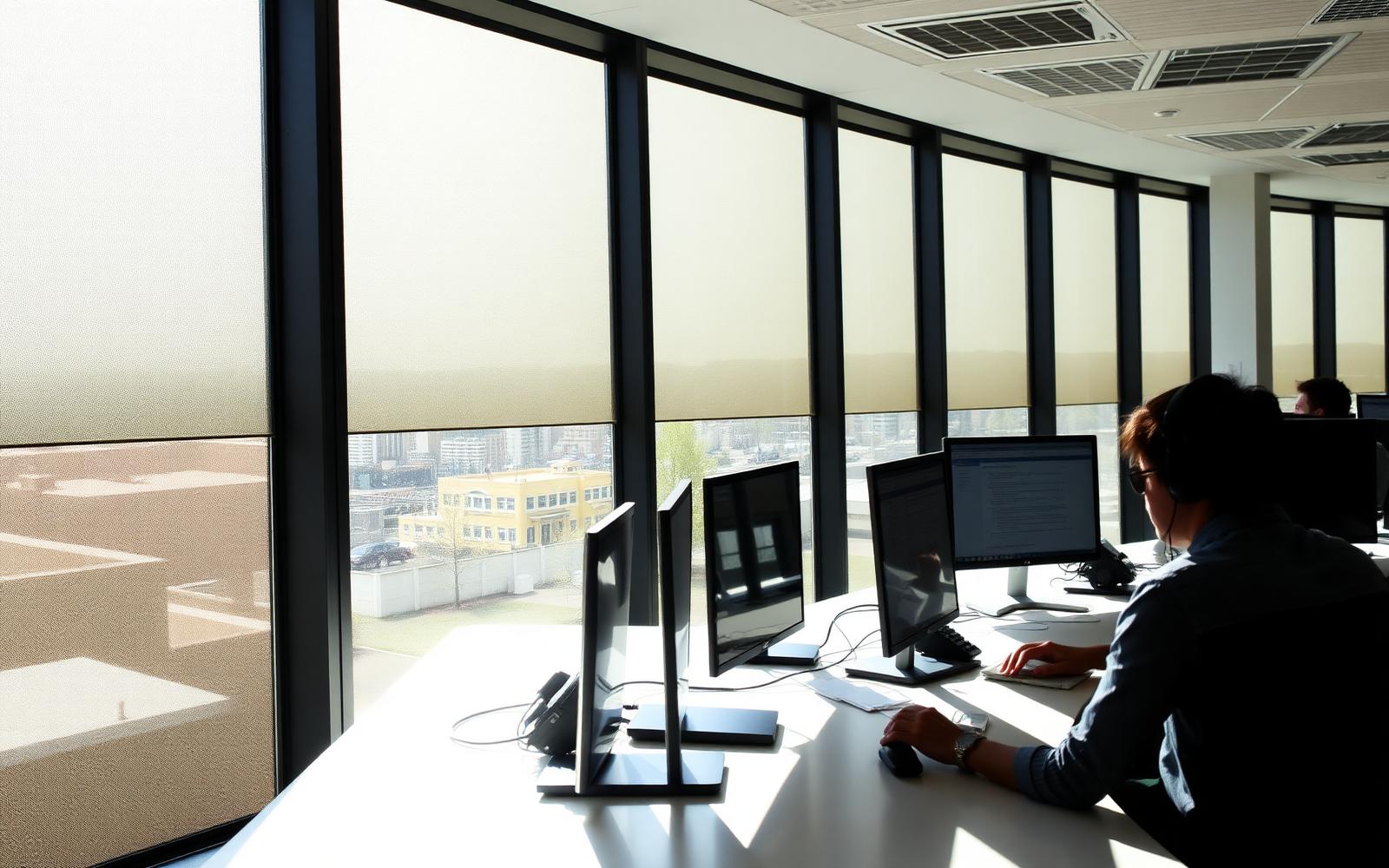
The primary job: eliminating screen washout on monitors and conference displays so blinds stay open and the floor keeps its daylight.
Get a Free Quote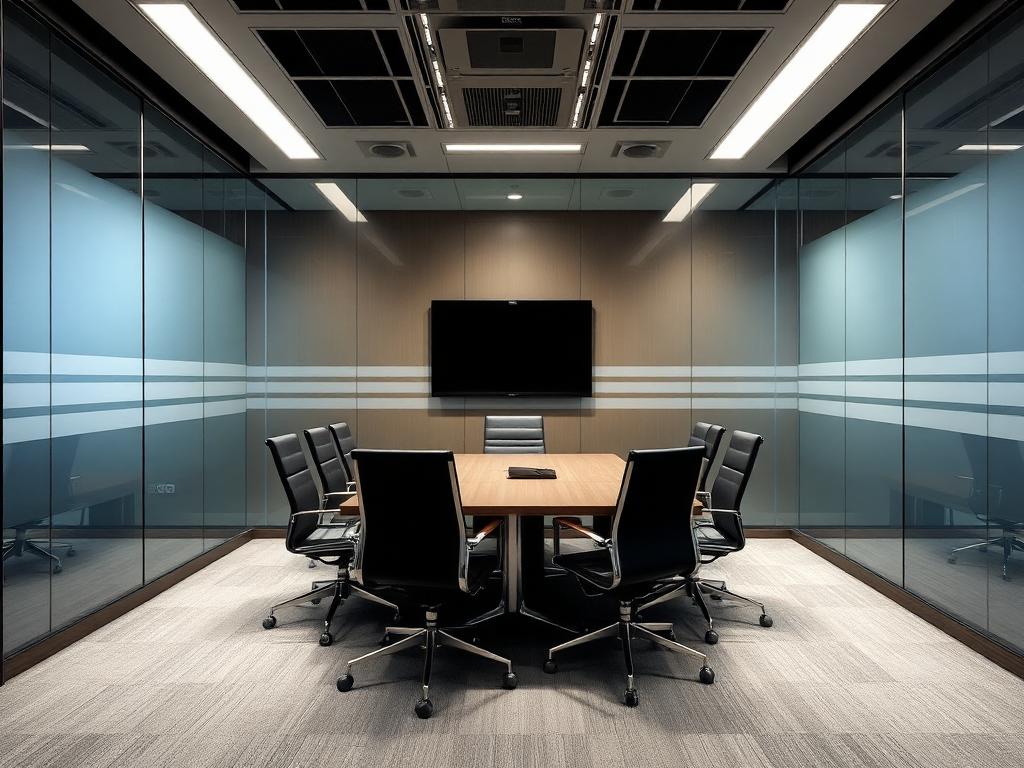
Privacy & Security
A secondary benefit — darker and dual-reflective tiers add one-way daytime privacy, and film can be paired with security film where glass is exposed at street level.
Get a Free QuoteTypes of Anti-Glare Film
Three tiers, matched to your floor size, exposure, and appearance requirements.
Standard Carbon / Matte
30–40% infrared rejection with a non-reflective matte finish. Budget-friendly and effective for small offices and interior suites where glare, not heat load, is the main complaint.
Infrared Series
75–80% infrared rejection. The practical middle tier for large office floors with significant west or south glazing, where cooling load and glare both need addressing.
Nano-Ceramic Premium
90–98% infrared rejection with a near-invisible, non-metallic build that won't interfere with WiFi or cellular. Specified for executive suites and high-rise curtain wall.
Light Transmission (VLT) Guide
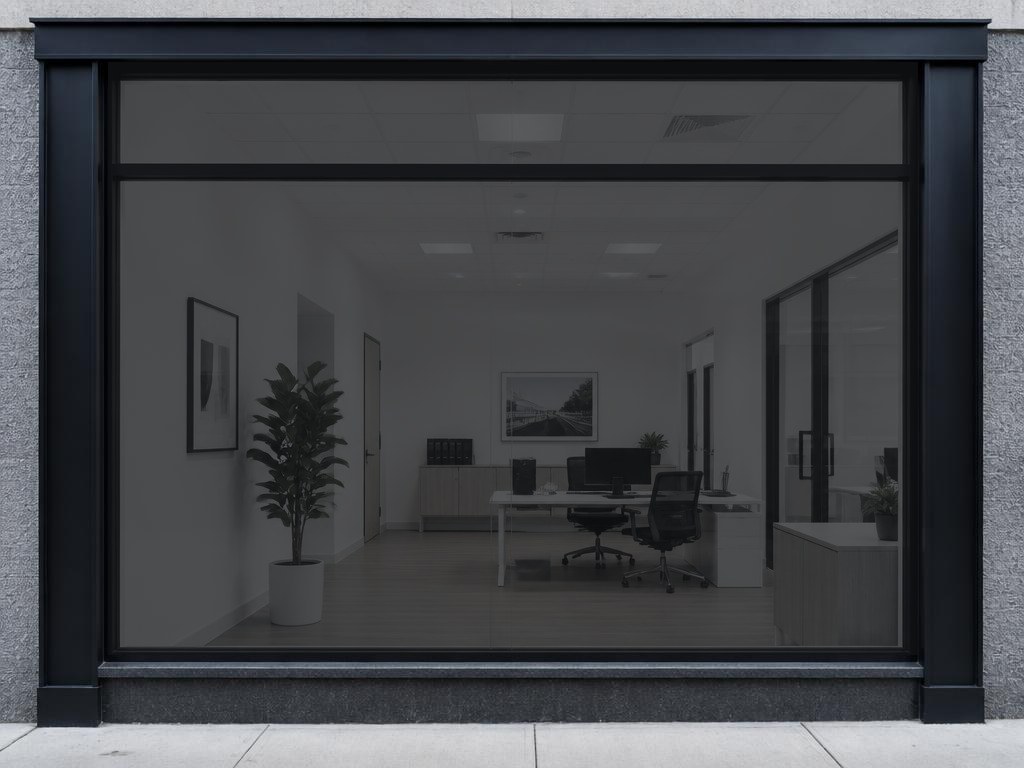
Six tiers, with appearance, best use, and the level of privacy each one actually delivers.
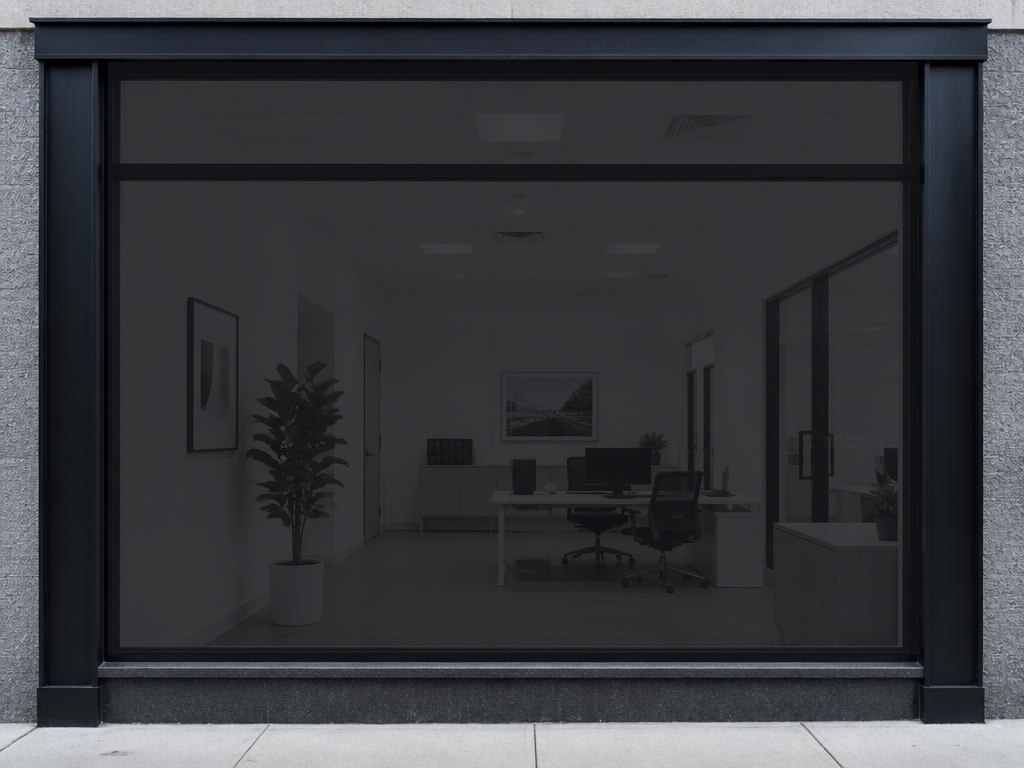
 10% VLT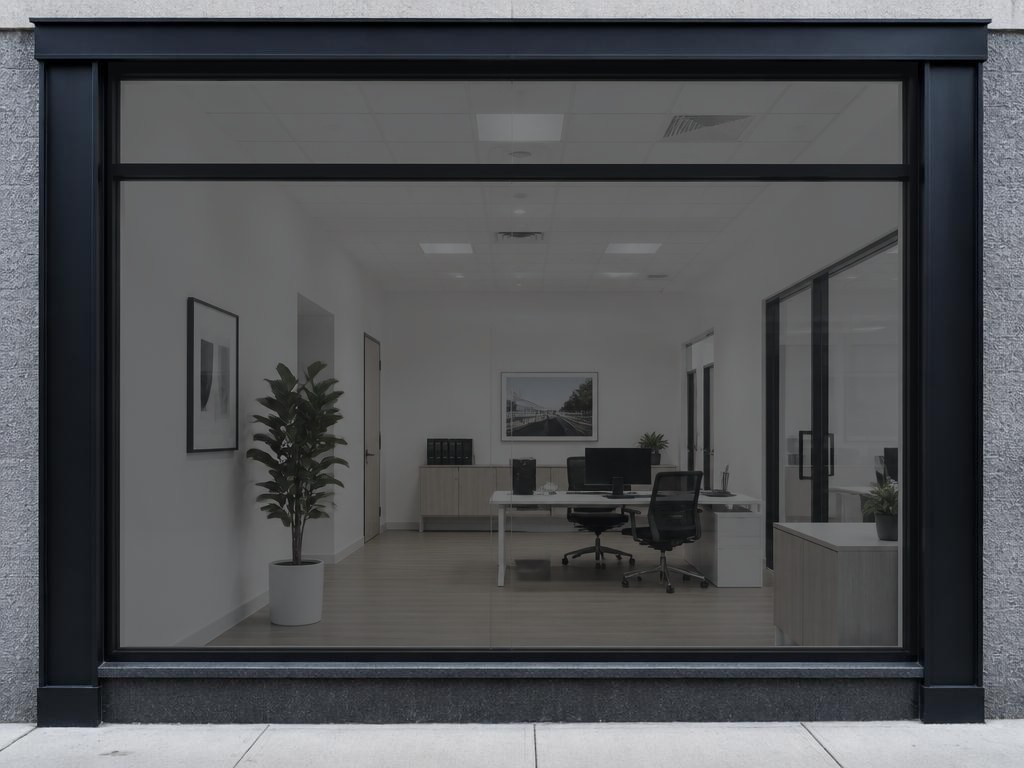
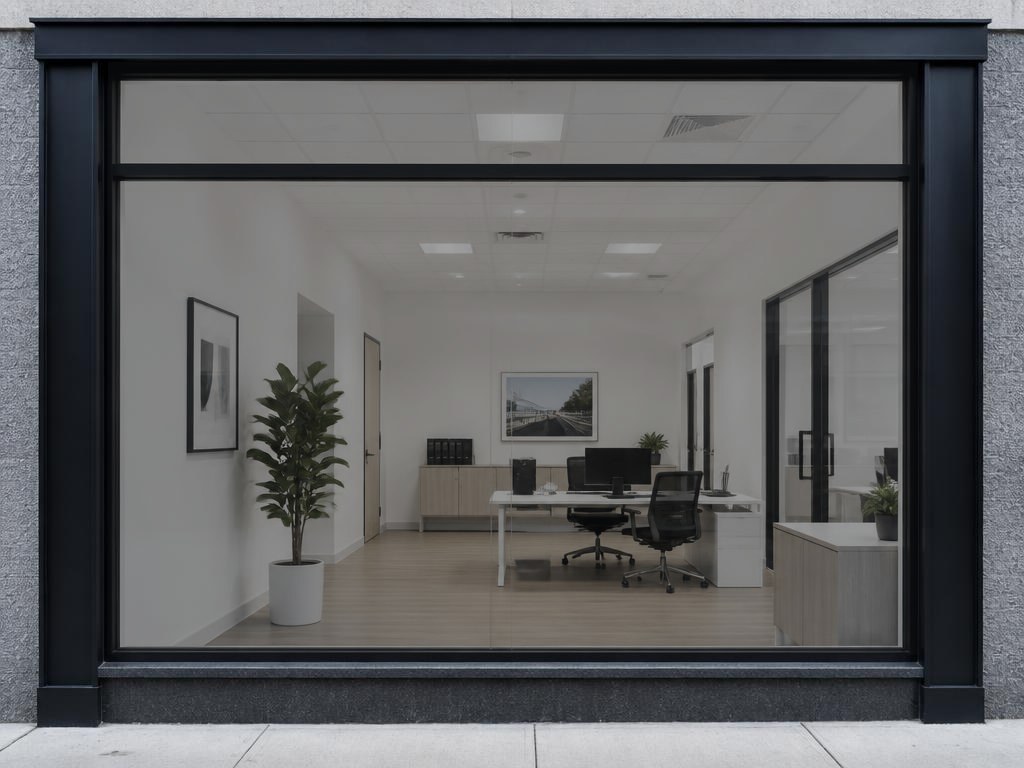
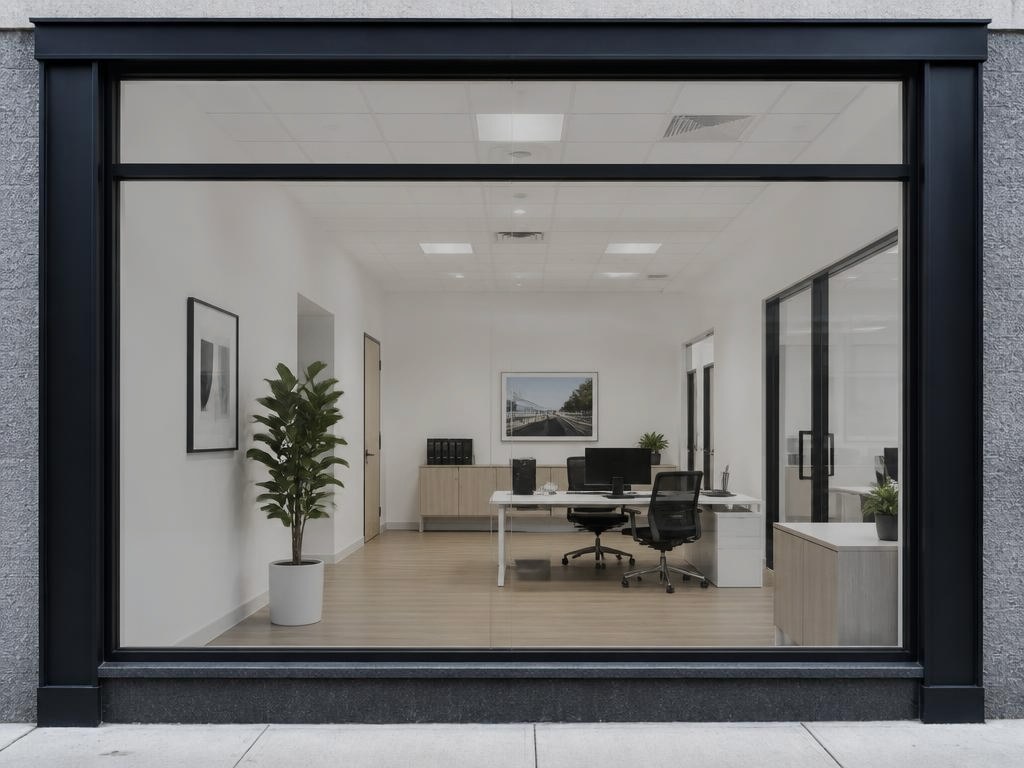
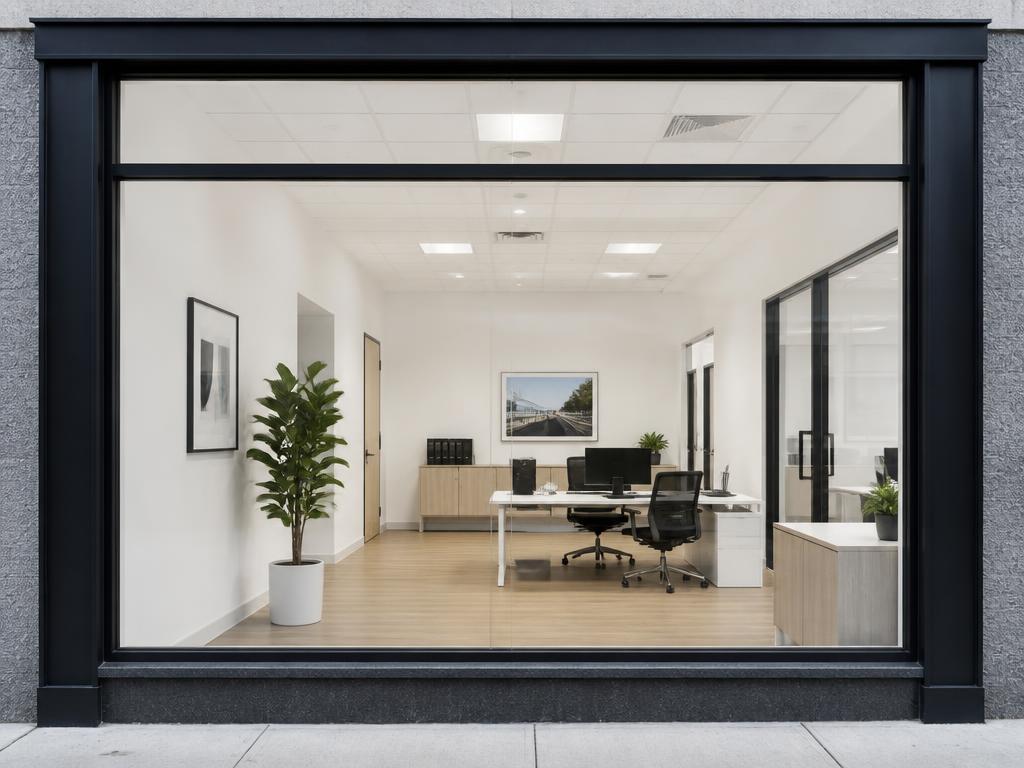
10% VLT — Very Dark
Appearance: strongly darkened. Best for: back-of-house and areas with severe west exposure. Privacy: very high, with a noticeable reduction in interior brightness.
Every tier is the same scene, shot under the same daylight, so the difference you see is the film — not the lighting.
The TWT Commercial Installation Process
Four steps we don't skip, on every commercial job.
Surface Decontamination
Every pane is scraped, flooded, and squeegeed to remove construction dust, scale, and residue. Contaminated glass is the single biggest cause of bubbles months later.
Precision Digital Cutting
Film is plotted or hand-cut to the exact daylight opening so edges sit tight to the frame with no gaps, overlaps, or ragged mullion lines.
Climate-Controlled Application
We control temperature and airflow during application, because film laid in dust or direct heat will never cure clean regardless of product grade.
Final Heat-Set & Inspection
Each pane is heat-set, squeegeed to spec, and inspected pane by pane against a punch list before we hand the floor back to you.
Your Warranty
Manufacturer-Backed Lifetime Warranty
Our premium commercial lines carry manufacturer coverage against bubbling, peeling, cracking, and color change, and the coverage is nationwide and transferable with the property. Exact terms are confirmed in writing on your proposal.
TWT Craftsmanship Guarantee
Zero-gap fit, no lifted edges, and no contamination under the film. If our workmanship fails, we return and correct it — no argument about whose fault it is.
After-Care Guide
Three rules for the first week and every cleaning cycle after.
3–5 Day Curing Period
Leave the film alone for the first few days. Mounting solution is still evaporating and the adhesive hasn't reached full bond strength.
Haze & Water Spots Are Normal
Small pockets of moisture and light haze during the cure are expected and clear on their own. They are not defects and don't need to be worked out by hand.
Ammonia-Free Cleaning
Mild soap and water or a dedicated ammonia-free glass cleaner, applied with microfiber only. Brief your janitorial vendor before the first cleaning cycle.
Care and performance standards referenced from the International Window Film Association.
FAQs
Anti-Glare Film Questions
How long does installation take?
A typical office suite is a single day; a full floor of a tower is usually one to two nights. We provide a written sequencing schedule with the proposal and work after-hours to avoid disrupting your business.
Will anti-glare film reduce daylight too much?
Not at the tiers most offices choose. A 35% or 50% VLT film cuts glare and heat while keeping the space bright — the point is to make daylight usable so blinds stay open, not to darken the floor.
Will it interfere with WiFi or electronics?
Non-metallic carbon and nano-ceramic films are signal-safe and won't attenuate WiFi, cellular, or GPS. Older metalized films can, which is why we default to ceramic in connected buildings.
Is 5–10% VLT too dark for an office?
For general workspace, yes — we rarely recommend it. Those tiers are meant for server rooms, storage, and back-of-house areas where visibility inward is undesirable and daylight isn't a priority.
Can film go over existing tinted or reflective glass?
Sometimes, but it has to be assessed. Adding film to already-absorptive or reflective glazing raises thermal stress risk, so we identify the existing glass makeup on site and only spec within manufacturer guidelines.
How long does anti-glare film last?
Professionally installed commercial film typically lasts 15–25 years on interior applications, which is broadly consistent with industry ranges for premium products.
Is it safe for all commercial window types?
Not automatically. Dual-pane, Low-E, laminated, and annealed glass each have different tolerances. We survey the glass before speccing, which is what protects both the glazing and your window warranty.
Will it help with energy savings?
Yes — rejecting solar heat before it enters reduces cooling demand, especially on west and south elevations. Our films are selected to support Title 24 energy performance goals and general LEED sustainability objectives — for your specific building's compliance requirements, we recommend confirming details with your architect or code consultant during your free estimate.
Related Commercial Services
Kill the Glare on Your Floor
Free on-site assessment and written proposal across Orange County and Los Angeles County.