


Commercial Window Film
Commercial Window Tinting for Southern California Businesses
Lower your cooling load, protect your interior, and secure your glass — without replacing a single window.
Everything You Need to Know
Click any section below to jump straight to what you need.
Core Benefits
UV, heat, glare, and privacy for commercial glass.
Jump to Section 02Film Series
Three performance tiers for every building type.
Jump to Section 03Understanding SHGC & VLT
The two numbers that define performance.
Jump to Section 04Installation Standard
How we work inside an occupied building.
Jump to Section 05California Compliance
Title 24, reflectivity, glare, and safety glass.
Jump to Section 06Warranty
Manufacturer, glass, and craftsmanship coverage.
Jump to Section 07After-Care
Curing and long-term cleaning standards.
Jump to Section 08FAQs
Straight answers for facility and property managers.
Jump to SectionThe Core Benefits of Commercial Film
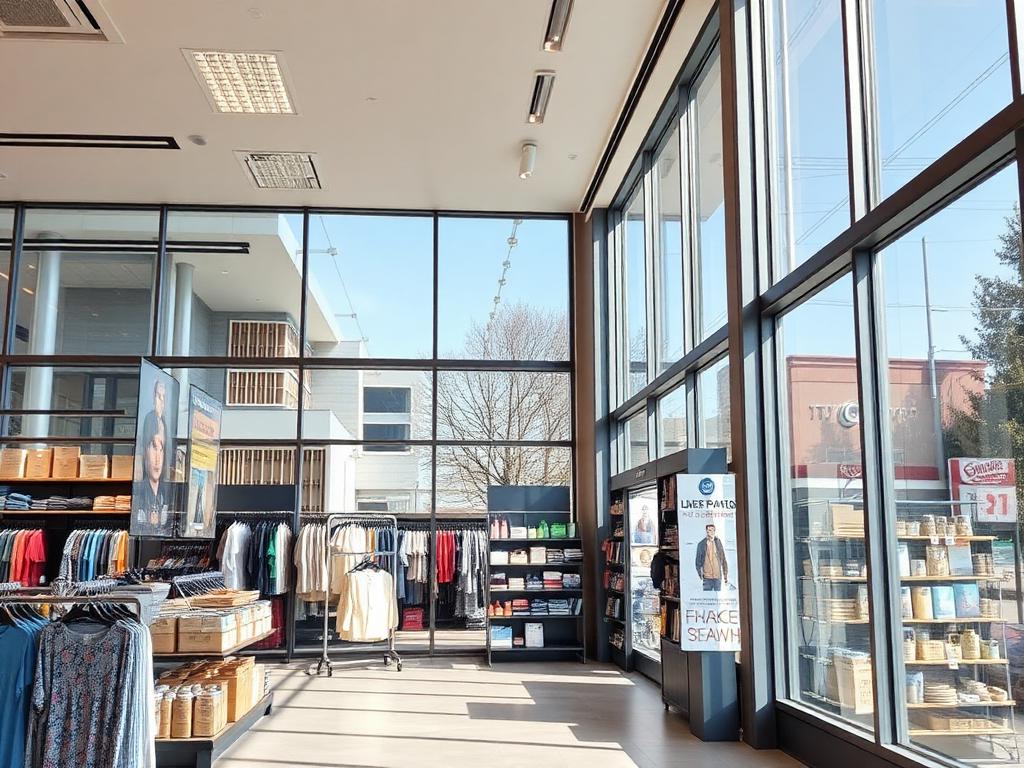
UV Protection & Asset Preservation
Professional-grade film blocks 99.9% of UV rays — the primary driver of faded merchandise, carpet, artwork, and finishes. For retail and showroom space, that protects inventory value directly.
Get a Free Quote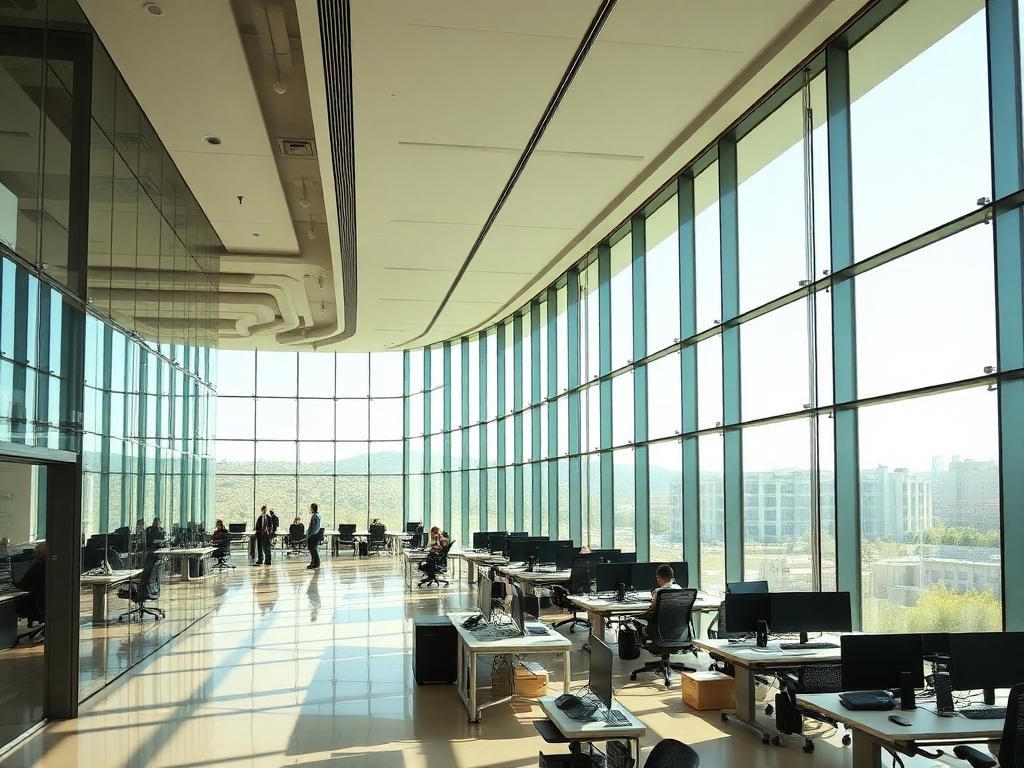
Heat Rejection & HVAC Efficiency
Solar control film rejects a significant share of infrared heat before it enters the building, easing peak cooling load and reducing hot-spot complaints on west- and south-facing elevations.
Get a Free Quote
Glare Control for Productivity
Film eliminates screen washout in open-plan floors and conference rooms, so blinds stay open and daylight stays usable instead of being blocked out entirely.
Get a Free Quote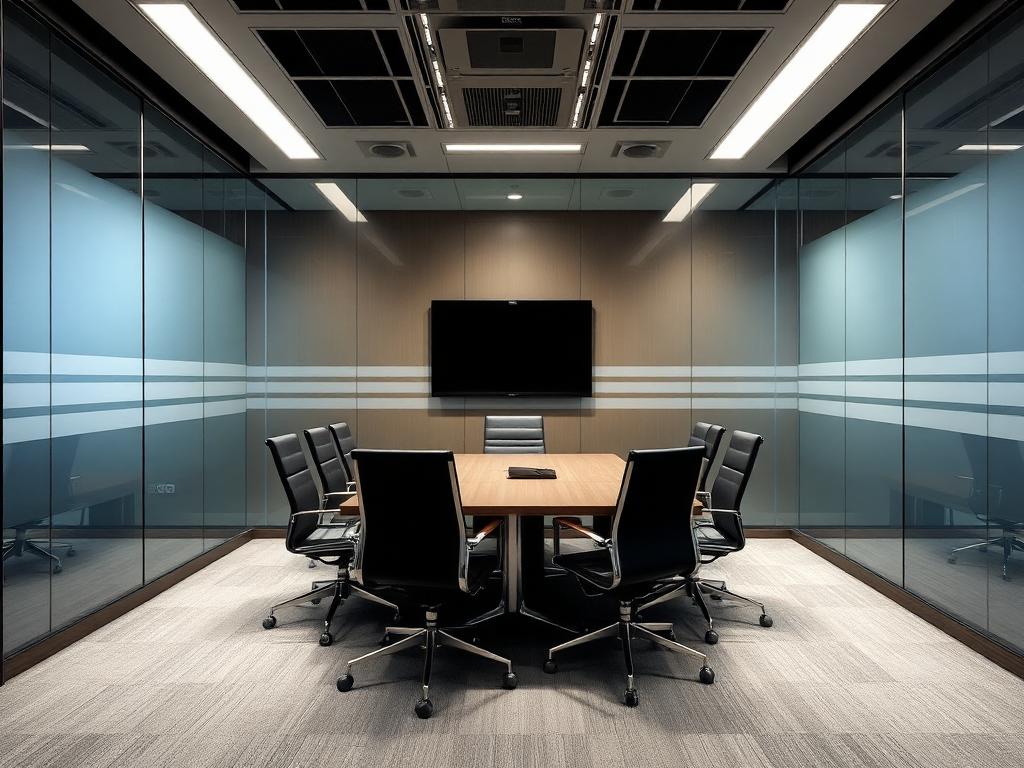
Privacy & Security
Dual-reflective film delivers one-way daytime privacy, and retail storefront security film can be added on ground-floor and high-exposure glass for forced-entry delay.
Get a Free QuoteThe TWT Commercial Film Series
Three tiers, matched to your building's exposure, glass type, and appearance requirements.
Solar Neutral & Night Vision
50–70% infrared rejection with a soft charcoal aesthetic and excellent night-time view-out. The workhorse choice for multi-tenant office buildings where a uniform exterior appearance matters.
Dual-Reflective & Privacy
75–85% infrared rejection with genuine one-way daytime privacy. Built for storefronts, ground-floor suites, and high-exposure glass that needs both heat control and discretion.
Prestige Nano-Ceramic
90–97% infrared rejection with a near-invisible appearance. Non-metallic construction means it won't interfere with WiFi, cellular, or building security sensors — the standard spec for modern connected buildings.
Understanding SHGC & VLT
Solar heat gain and visible light transmission decide how commercial glass actually performs.
SHGC — Solar Heat Gain Coefficient
California's 2026 Title 24 code targets an SHGC of 0.23 or lower for new and replacement commercial glazing in most Southern California climate zones. Window film isn't itself Title 24-certified the way a manufactured window is, but it's a widely used way to meaningfully improve existing glass toward that target without a full glass replacement.
VLT — Visible Light Transmission
VLT is the percentage of visible light the film lets through. Heat rejection and VLT are not the same measurement — modern ceramic films reject a great deal of heat while staying light and neutral, which is why a dark film isn't automatically a higher-performing one.
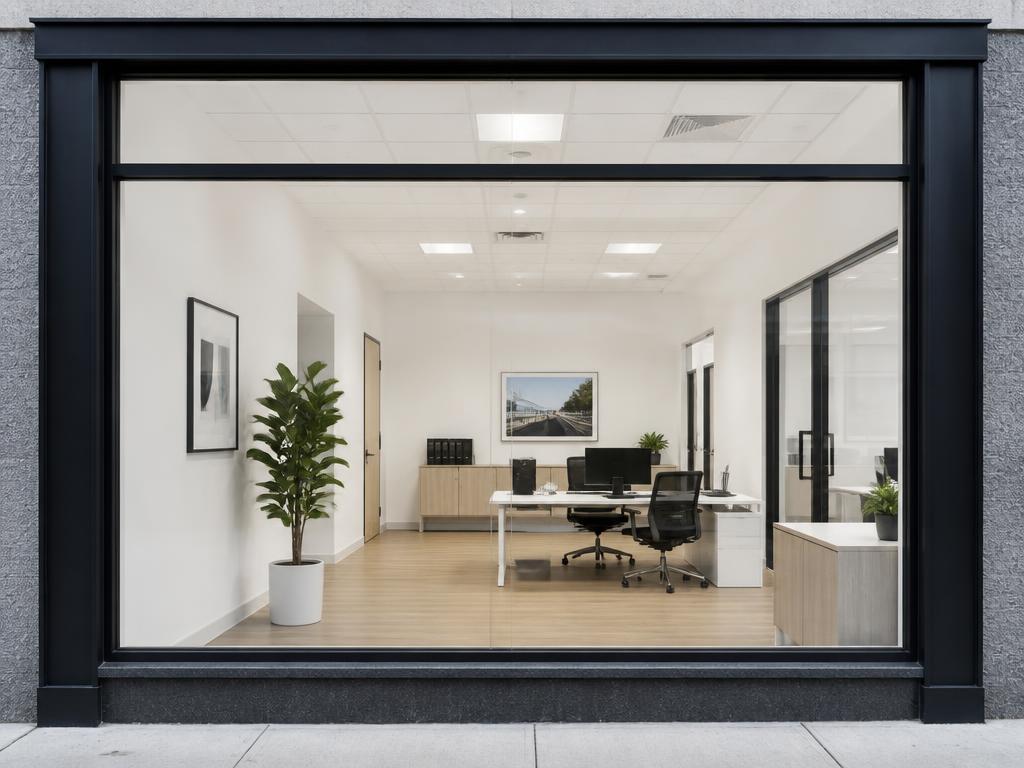
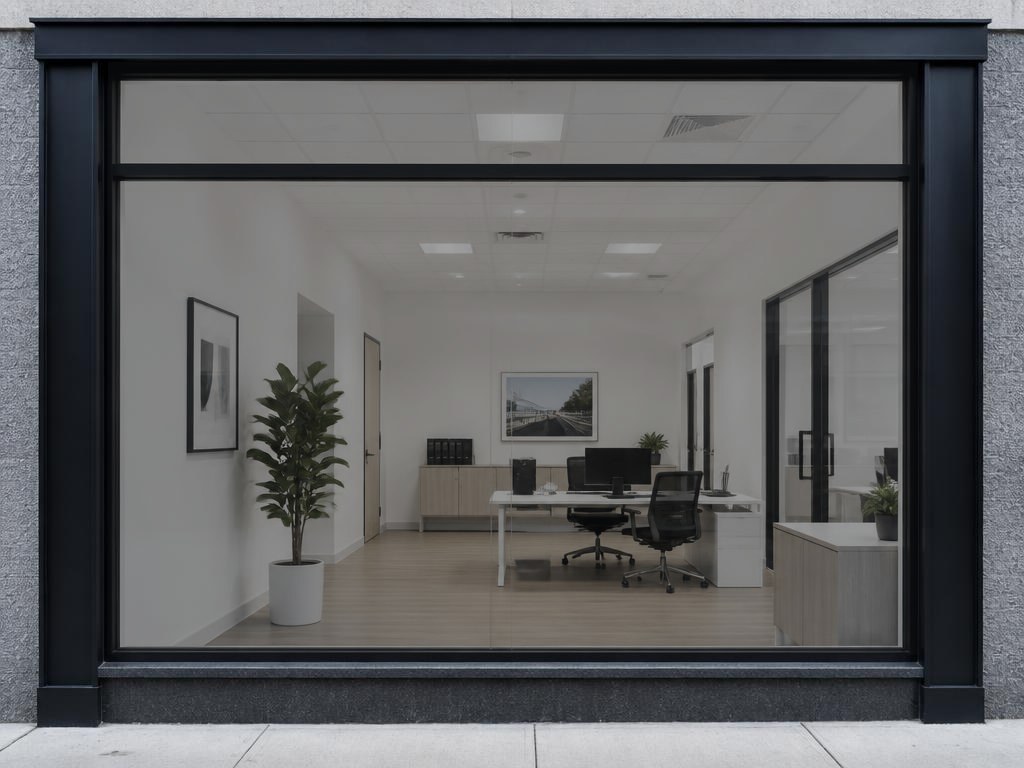 35% VLT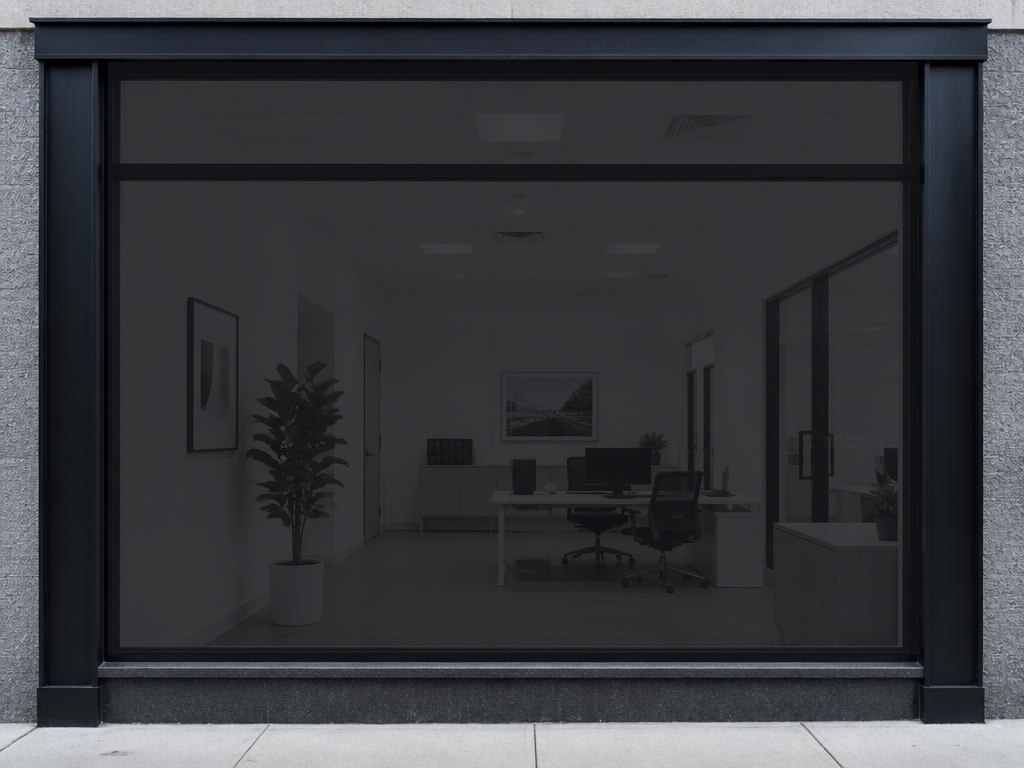
35% VLT — Corporate Neutral
The most common office specification. Noticeably cuts glare and heat while keeping a professional, neutral appearance from both inside and out.
Every tier is the same scene, shot under the same daylight, so the difference you see is the film — not the lighting.
The TWT Commercial Installation Standard
Four non-negotiables on every commercial job, in occupied buildings and empty shells alike.
Environment Shielding & Property Protection
Workstations, flooring, and equipment are masked and protected before any solution touches glass. In occupied buildings this is the difference between a clean install and a tenant complaint.
Multi-Stage Decontamination
Commercial glass carries years of construction dust, hard-water scale, and adhesive residue. Every pane goes through a multi-stage scrape-and-flood process before film is laid.
Architectural Precision Trimming
Film is cut to the daylight opening with a consistent micro-edge — no visible gaps, no lifted corners, no ragged mullion lines across a curtain wall.
After-Hours, Disruption-Free Execution
We schedule nights and weekends for office towers, retail floors, and medical suites so your business never stops for the install. Phased floor-by-floor sequencing is standard on larger buildings.
California Commercial Compliance
Energy code, appearance guidelines, glare liability, and safety glazing — the four things that actually govern commercial film.
Title 24 Energy Code
California's 2026 Title 24 code targets an SHGC of 0.23 or lower for new and replacement commercial glazing in most Southern California climate zones. Window film isn't itself Title 24-certified the way a manufactured window is, but it's a widely used way to meaningfully improve existing glass toward that target without a full glass replacement.
Reflectivity & Aesthetic Guidelines
Many municipalities, landlords, and property-management agreements restrict highly mirrored or chrome-finish film for architectural harmony across a building's elevations. Spectrally selective film achieves the heat rejection without the mirrored look — we confirm your building's specific guidelines before speccing.
The “Nuisance” Glare Consideration
California civil nuisance law can expose a property owner to liability if reflective film directs concentrated glare onto a neighboring building or roadway. Dual-reflective film avoids this by directing heat away without the blinding exterior glare of older reflective products.
Safety Glass at Hazardous Locations (CPSC 1201)
Federal law (16 CFR 1201) requires certified safety glazing in specific hazardous locations — building entries, stairwells, and areas near doors. Ordinary annealed glass, even with security film applied, does not meet this standard on its own unless the film-and-glass assembly has been specifically tested and listed as safety glazing. Security film is a genuine upgrade to impact performance and injury reduction, but it supplements — it doesn't substitute for — certified safety glazing where code requires it.
This is general information, not legal advice. Confirm current requirements for your specific building and jurisdiction with your architect, code consultant, or building department.
Your Commercial Warranty
Manufacturer's Limited Commercial Warranty
3M and LLumar commercial films carry manufacturer coverage for color stability and adhesive integrity, including labor and materials. Exact term lengths vary by product line and are confirmed in writing on your proposal.
Glass Protection Coverage
Select commercial film lines include glass breakage and seal-failure coverage against thermal stress when the film is properly matched to the glass makeup. Coverage amounts and terms are product-specific and confirmed before install.
TWT Craftsmanship Guarantee
Zero-gap fit, no lifted edges, and non-metallic signal-safe construction on every ceramic install. If our workmanship fails, we come back and correct it.
After-Care Guide
Share these three rules with your facilities and janitorial team.
30-Day Curing Period
Mounting solution evaporates through the film over roughly 30 days. Slight haze or small water pockets during this window are normal and resolve on their own — no cleaning is needed on freshly filmed glass.
Ammonia-Free Cleaning Only
Ammonia degrades film adhesives and scratch-resistant coatings. Brief your janitorial vendor: mild soap and water or a dedicated ammonia-free glass cleaner is the only approved standard.
Microfiber & Thick Glass Notes
Microfiber or soft squeegee only — no abrasive pads or razor blades. Thick commercial glazing and dual-pane assemblies hold heat longer, so allow the full cure before any deep-clean cycle.
FAQs
Commercial Window Tinting Questions
Is window film a deductible business expense?
Commercial energy-efficiency retrofits, including window film, may qualify for tax incentives at the federal and California level. We won't quote specific code sections or deduction amounts — consult your tax professional about current programs and how they apply to your property.
Does window film contribute to LEED certification?
Energy-efficient window film can contribute toward certain LEED credits as part of an overall energy and daylighting strategy. Point totals depend on the whole project, so confirm the specifics with your sustainability consultant.
Will film interfere with WiFi or building security systems?
Not if the right product is specified. Metalized films can attenuate signal; nano-ceramic films are non-metallic and signal-safe, which is why they're our default recommendation for connected buildings, data-adjacent floors, and alarmed glass.
Can installation happen after-hours or on weekends?
Yes — it's how most of our commercial work is done. We phase office towers floor by floor and schedule retail installs outside trading hours so your operation never pauses.
How does film relate to Title 24 compliance?
California's 2026 Title 24 code targets an SHGC of 0.23 or lower for new and replacement commercial glazing in most Southern California climate zones. Film isn't Title 24-certified the way a manufactured window is, but it's a widely used way to meaningfully improve existing glass toward that target without full replacement.
Does film provide privacy at night?
Dual-reflective and privacy films work on a light differential, so they deliver one-way privacy during daylight hours. Once interior lights are on after dark, the effect reverses. Where 24-hour privacy is required, frosted or opaque film is the correct product.
Will installation affect our building's window warranty?
Only if the wrong film is applied to the wrong glass. We identify the glass makeup — annealed, tempered, Low-E, dual-pane — on site and spec within the manufacturer's thermal-stress guidelines, which is what keeps both warranties intact.
What's the typical timeline for a full office tower?
It depends on square footage, access, and how many floors can be worked per night. A single floor is usually a night or two; a full tower is phased over several weeks. We provide a written sequencing schedule with the proposal.
Related Commercial Services
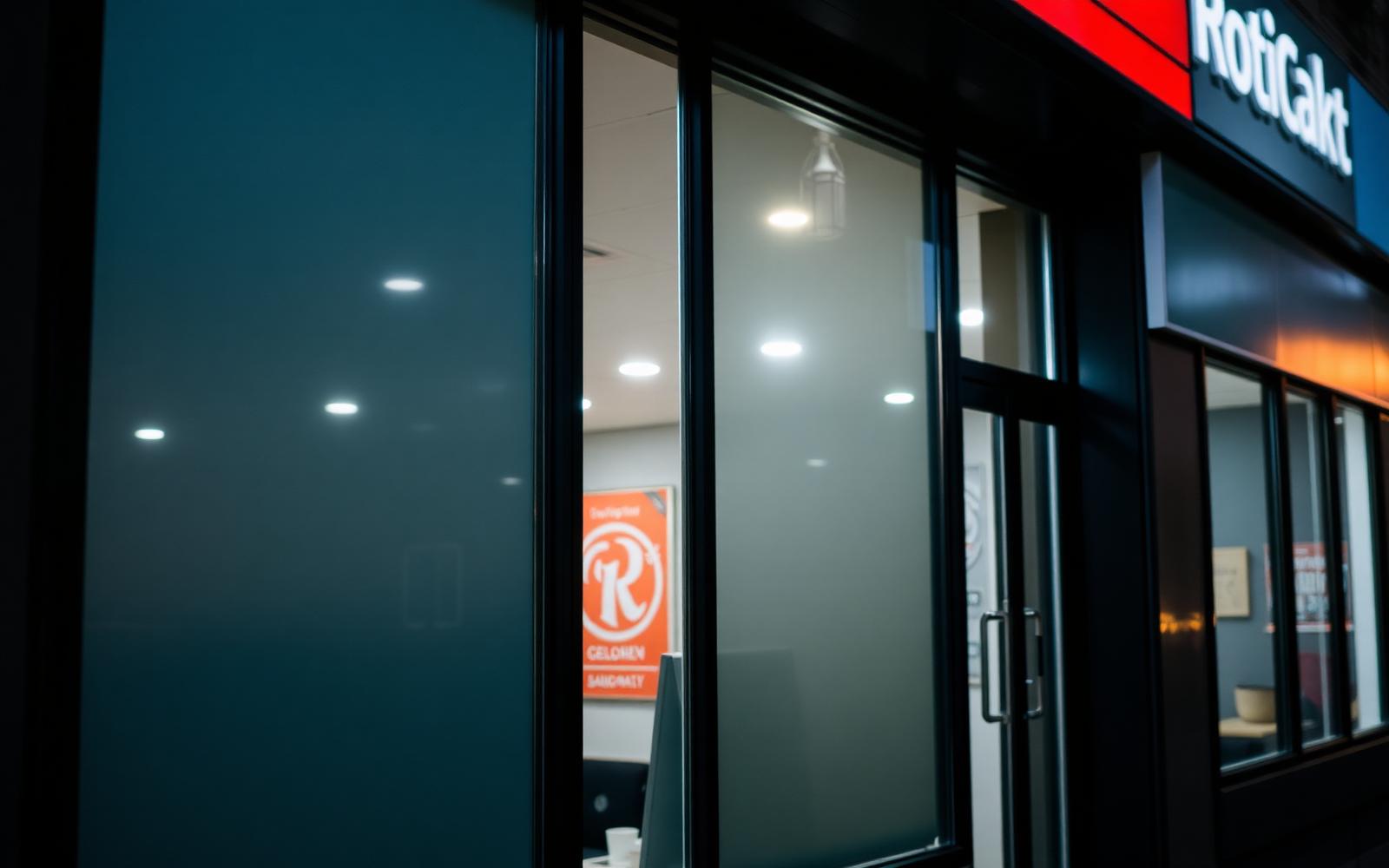
Retail Storefront Security Film
Slow smash-and-grab entry and protect merchandise and staff.
Learn More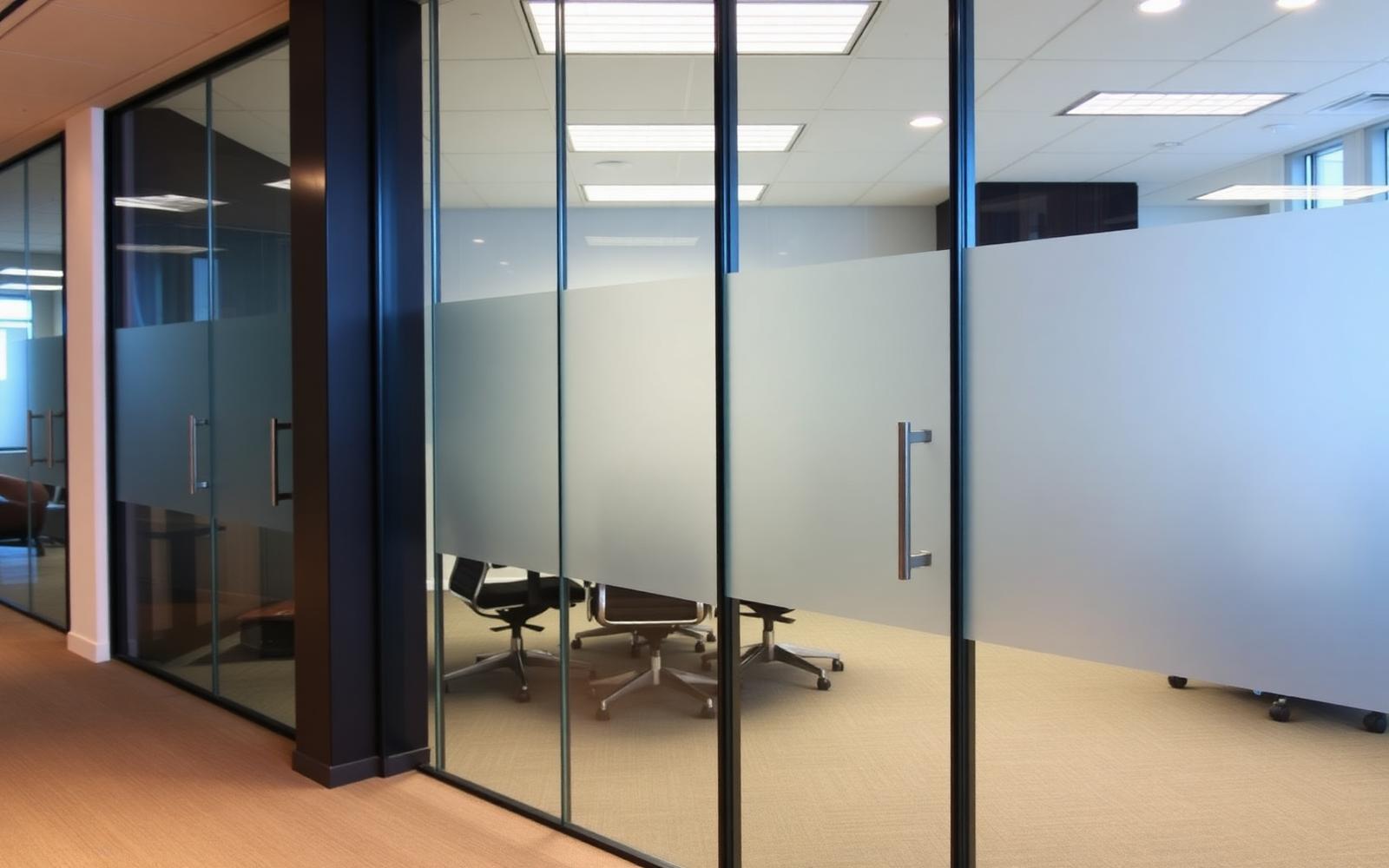
Office Privacy & Frosted Graphics
Frosted and branded film for partitions and conference rooms.
Learn More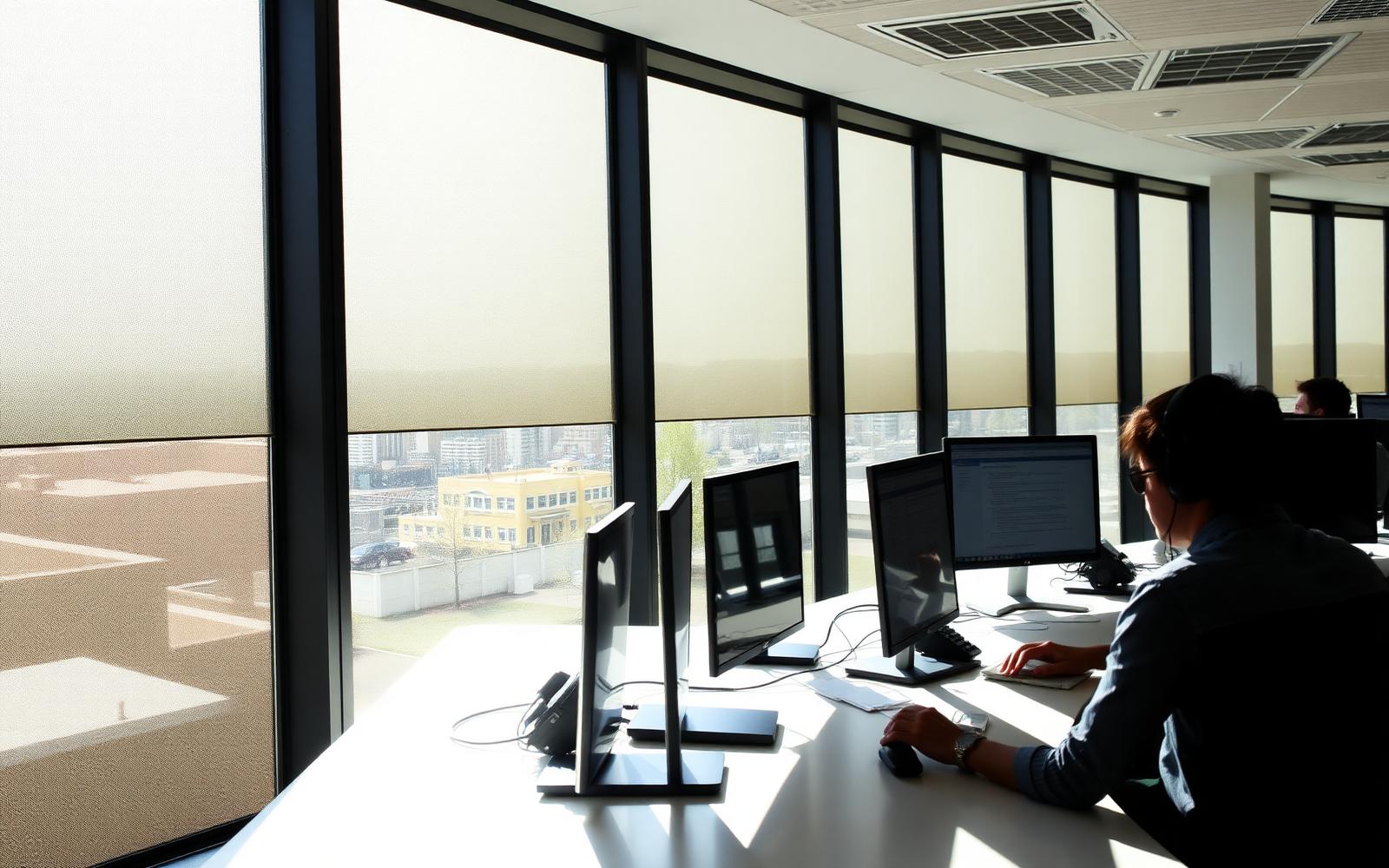
Commercial Anti-Glare Film
Eliminate screen washout without sacrificing natural light.
Learn More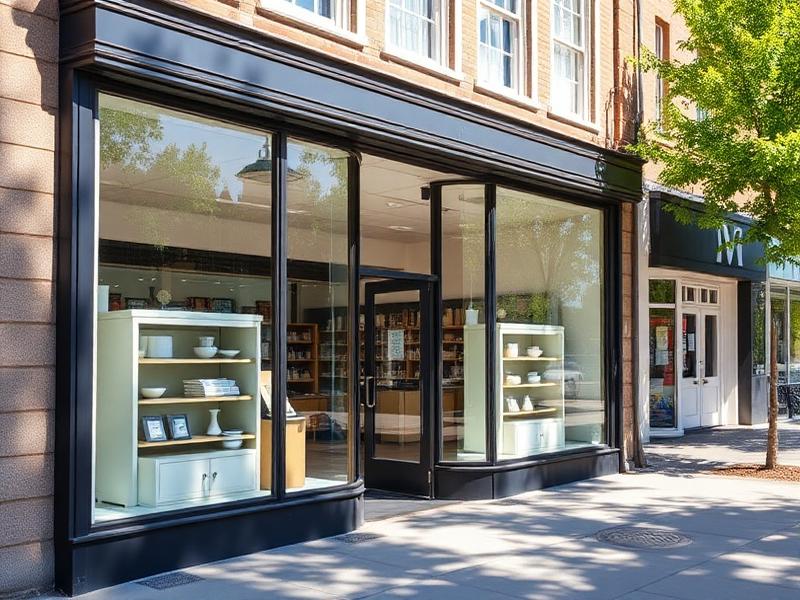
Commercial Services Hub
Every commercial film program we run across Southern California.
Learn MoreGet a Free Commercial Estimate
On-site assessment, glass survey, and written proposal — across Orange County and Los Angeles County.