
Commercial Window Film
Commercial Decorative Film
Frosted, gradient, patterned, and branded film that turns plain glass into private conference rooms and finished interior design — without replacing a single lite.
Everything on This Page
Click any section below to jump straight to it.
What Decorative Film Does
Design, privacy, and wayfinding in one layer.
Jump to Section 02Film Styles
Frost, gradient, pattern, texture, branded.
Jump to Section 03Where It Works Best
Four places it earns its cost.
Jump to Section 04Design & Install Process
Four steps from concept to finished glass.
Jump to Section 05FAQs
Straight answers before you spec it.
Jump to SectionWhat Decorative Film Actually Does
One thin layer doing three jobs at once.
Decorative film is applied to the surface of existing glass to change how it looks and how much it reveals. It delivers the appearance of etched, frosted, or patterned architectural glass at a fraction of the cost, on the glass you already own.
In practice it does three things simultaneously: it obscures sightlines where a room needs discretion, it makes full-height glass visible so people don't walk into it, and it carries pattern or brand across a surface that was previously doing nothing.
What it is not is a solar or safety product. Standard decorative film is not specified for heat rejection, and film on annealed glass does not by itself satisfy CPSC 16 CFR 1201 safety-glazing requirements. When a project needs design plus performance, we layer or spec accordingly rather than overselling one film.
Four Ways to Finish Glass
All available from our 3M and LLumar decorative lines, in stock patterns or fully custom.
Frost & Etched-Glass Film
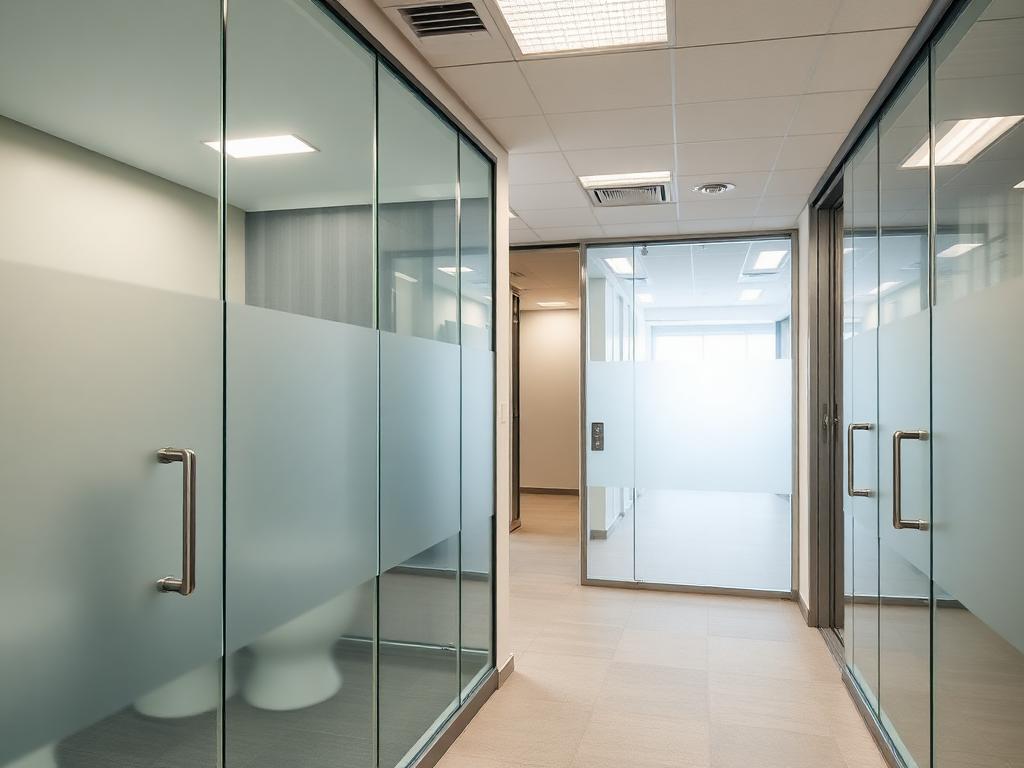
The workhorse. A matte, sandblasted-glass look that obscures sightlines while passing nearly all the daylight through — applied full-coverage or as a banded strip at seated eye level.
Get a Free Quote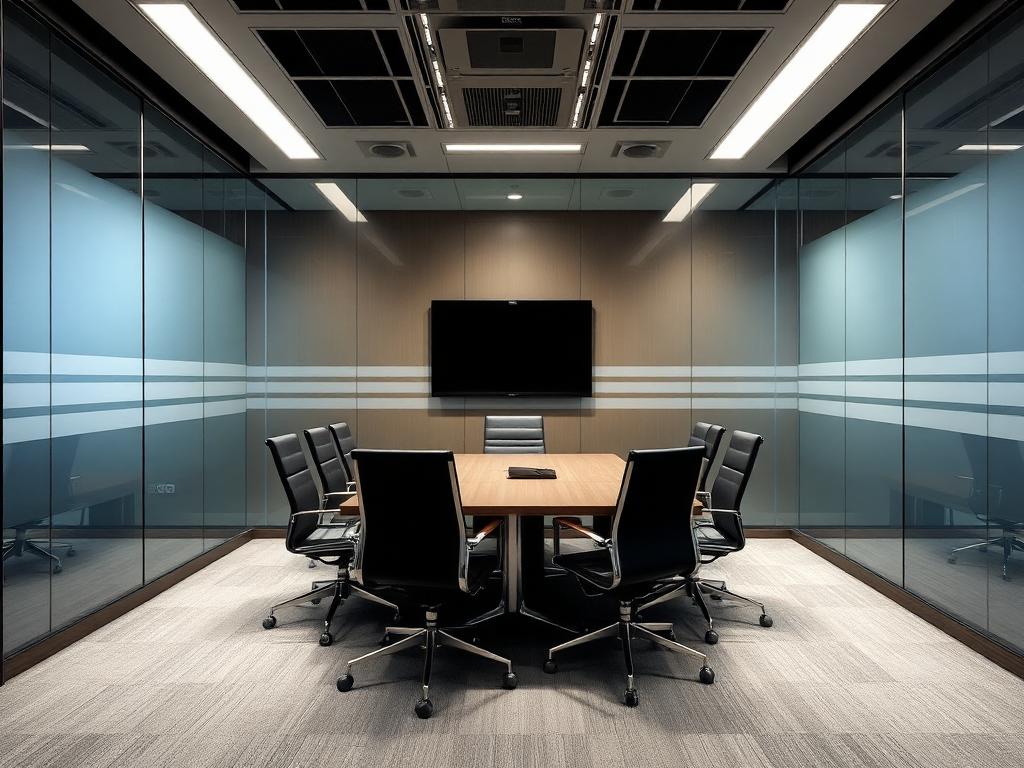
Gradient & Banded Film
Frost that fades to clear across the pane. Screens the lower half of a conference room or an open-plan neighborhood without closing the space in visually.
Get a Free QuotePatterned & Textured Film
Linen, reeded, dot-gradient, geometric, and custom patterns. Adds architectural texture to plain lites and hides the fingerprints and smudges that plain glass shows all day.
Get a Free Quote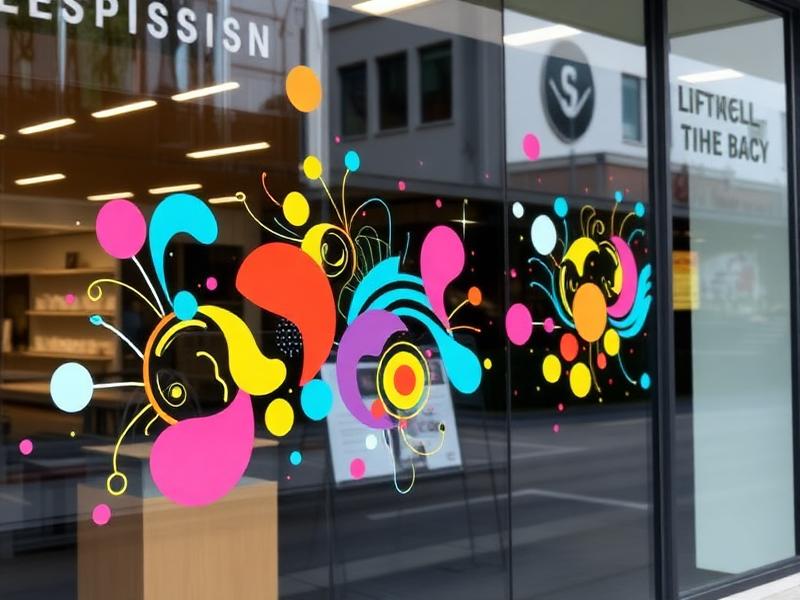
Branded & Cut-Logo Film
Your mark cut from frost or printed on a decorative base — lobby glass, entry doors, and reception backdrops that do brand work instead of just being transparent.
Get a Free QuoteWhere It Works Best
The four commercial situations where decorative film pays for itself fastest.
Conference & Huddle Rooms
Banded frost at seated eye level gives real meeting privacy without blinds, and keeps whiteboards and screens out of the corridor sightline.
Lobbies & Reception
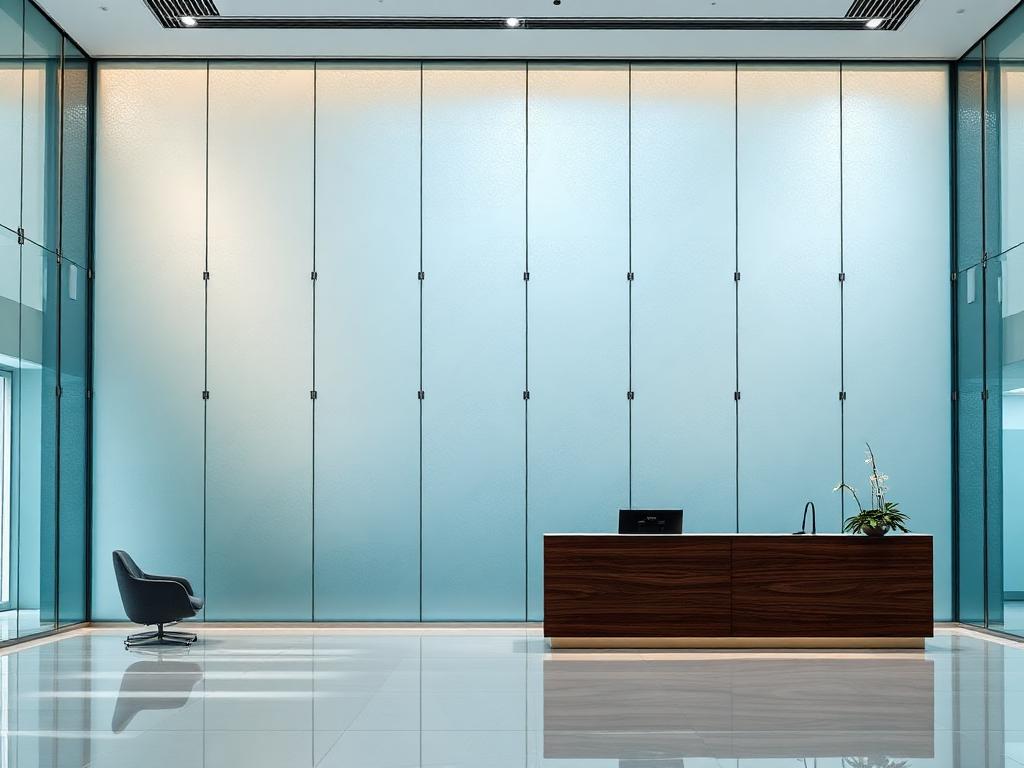
Gradient and etched patterns turn a plain entry lite into a designed surface, and screen the back-of-house and reception desk from the front door.
Open-Plan Partitions
Texture and pattern break up long runs of glass, mark neighborhoods, and make partitions visible enough that people stop walking into them.
Healthcare & Professional Suites
Frost delivers the discretion that intake desks, exam corridors, and HR and legal offices need, at a fraction of the cost of specifying obscured glass.
Design & Installation Process
Measured, proofed, fabricated, installed — by one crew, on your schedule.
Site Walk & Measurement
We measure every lite, note mullions, door hardware, and existing film, and check whether the glass is tempered, laminated, or already coated — all of which affect what can be applied.
Design & Proof
Bring finished artwork or a rough idea. We build scaled production files, show frost density and band heights against your actual dimensions, and send a proof before anything is cut or printed.
Fabrication
Cut or printed on commercial-grade decorative media from our 3M and LLumar lines, matched to interior or exterior exposure. Custom patterns and logos are produced to the approved proof.
Installation & Cleanup
Installed by our own certified crew, often after hours to keep floors working. Edges are trimmed tight to the glass, seams aligned across adjacent lites, and the space cleaned before we leave.
FAQs
Decorative Film Questions
What's the difference between decorative film and frosted privacy graphics?
Mostly emphasis. Decorative film is chosen for how the glass looks — pattern, gradient, texture, brand. Frosted privacy work is chosen for what the glass hides. They use the same material families and are frequently the same install, so if privacy is your primary goal start with office privacy & frosted graphics.
Does decorative film provide privacy at night?
Frost and heavy patterns do, because they scatter light rather than reflect it — they obscure in both directions, day and night. Light gradients and open patterns only partially obscure, and reflective solar film specifically does not provide privacy after dark, when interior lighting reverses the effect.
Does it block heat or UV?
Standard decorative film is a design product, not a solar product. It blocks a meaningful amount of UV but is not specified for heat rejection. If a wall of glass needs both, we either layer a solar film on the exterior-facing surface or spec a decorative film with solar properties — tell us at the estimate so it's designed in from the start.
Can it be removed or changed later?
Yes, and that's a large part of why tenants choose it. Decorative film comes off cleanly from sound glass, which makes it a good fit for leased space, rebrands, and departmental moves where obscured or etched glass would be a permanent, expensive commitment.
How does the cost compare to frosted or etched glass?
Decorative film is dramatically cheaper. Film runs in the range of a typical commercial film install per square foot, while replacing glazing with factory-obscured or acid-etched glass generally runs well over $100 per square foot installed once removal, glass, and labor are counted — and it can't be changed afterward.
Will it work on textured, wired, or already-tinted glass?
Flat, smooth glass is the ideal substrate. Heavily textured and wired glass won't take film reliably, and existing film has to come off first — layering is not something we do. We assess all of this at the site visit and tell you up front if a lite isn't a candidate.
Do you meet safety-glazing or ADA visual-marking requirements?
Decorative film is commonly used to satisfy visual manifestation requirements on full-height glass so people can see the panel — that's a legitimate use and a common reason clients call. It is not a safety-glazing product: film applied to annealed glass does not by itself satisfy CPSC 16 CFR 1201, and any code compliance has to be confirmed by your architect or building official.
Related Services
Design Your Glass
Free on-site measurement, samples in your own light, and a written quote across Orange County and Los Angeles County.