

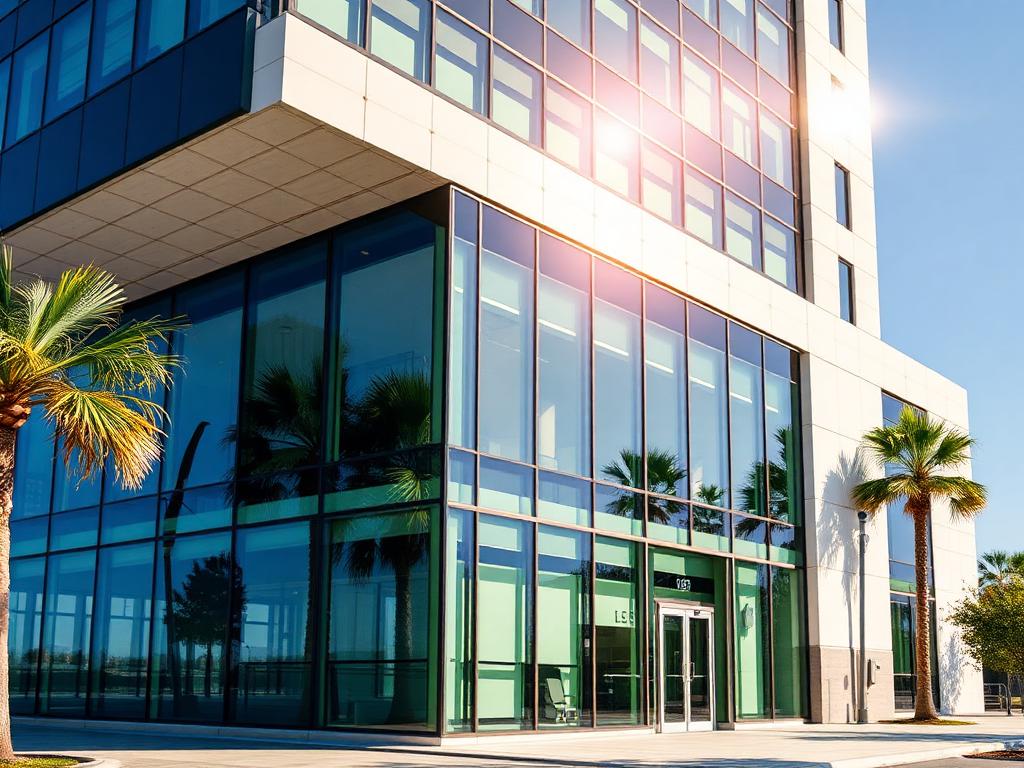
Commercial Window Film
Commercial Solar & Privacy Film
Stop the afternoon sun and control who can see in — without replacing a single pane of glass.
Everything You Need to Know
Click any section below to jump straight to what you need.
How Film Blocks Heat
Reflection, absorption, and selective transmission explained.
Jump to Section 02SHGC, VLT & TSER
The three numbers that define film performance.
Jump to Section 03Film Options
Three performance tiers for commercial glass.
Jump to Section 04One-Way Daytime Privacy
What reflective film does — and doesn't — do after dark.
Jump to Section 05Film vs. Glass Replacement
Cost per square foot and realistic payback periods.
Jump to Section 06FAQs
Straight answers on heat, privacy, and compatibility.
Jump to SectionAbout Commercial Solar & Privacy Film
Reject solar heat and shield sightlines without turning your workspace into a cave. Spectrally selective and reflective films are sized to your glass, orientation, and exposure — so the west elevation gets a different spec than the shaded north face.
TWT SoCal has been installing architectural window film across Orange County and Los Angeles County for more than 17 years. We're an authorized 3M and LLumar dealer, which means we spec the exact film for your glass type, sun exposure, and budget instead of selling whatever one brand happens to stock.
Every project starts with a free on-site estimate. We measure your glass, review performance goals, show you samples in your own light, and leave you with a written quote — no pressure and no obligation.
- 3M & LLumar authorized dealer
- Free on-site measurement and estimate
- Lifetime manufacturer + workmanship warranty
- Santa Ana and North Hollywood crews
Why Property Owners Choose This Film
Certified Installation
Every job is installed by our own 3M and LLumar certified crew — no subcontractors, no rotating labor.
Free On-Site Estimate
We measure your actual glass, check orientation and exposure, and hand you a written quote at no cost.
Lifetime Warranty
Manufacturer-backed film coverage plus our own workmanship guarantee on the installation itself.
Two SoCal Locations
Santa Ana serves Orange County and North Hollywood serves Los Angeles County — same crew standards at both.
Clean, Fast Turnaround
Most projects wrap in a day. We work around your hours and leave the space cleaner than we found it.
Dual-Brand Film Access
We're not locked into a single manufacturer, so we spec the film that fits your budget and performance target.
How Film Blocks Heat
Modern film manages the solar spectrum three ways at once — it isn't just a dark layer on the glass.
Reflection
Ceramic and ceramic-metallic layers bounce infrared energy back outside before it ever crosses the glass line. This is where the bulk of the heat rejection happens on a west- or south-facing elevation.
Absorption
Coatings within the film absorb residual solar energy and dissipate it back out through the glass surface, so it never radiates into the occupied space as re-emitted heat.
Selective Transmission
Modern film targets the heat-carrying wavelengths specifically while letting visible light pass through — unlike older dark tints, which blocked the whole spectrum equally and left interiors dim.
On large commercial curtain walls and storefront glazing, this matters far more than it does on a house — the sheer surface area means every percentage point of infrared rejection translates into real tonnage off the cooling system.
Understanding SHGC, VLT & TSER
Three measurements decide how your glass actually performs after film.
SHGC
California's 2026 Title 24 code targets an SHGC of 0.23 or lower for new and replacement commercial glazing in most Southern California climate zones. Window film isn't itself Title 24-certified the way a manufactured window is, but professional film is a widely used way to meaningfully improve existing glass toward that target without a full glazing replacement.
VLT
Visible light transmission — the percentage of daylight the film lets through. It is not the same measurement as heat rejection, which is why a dark film isn't automatically a higher-performing one.
TSER
Total solar energy rejected — the single figure that combines infrared, visible, and UV rejection. It's the cleanest number for comparing two films head to head.
Want the full explainer on these three numbers, Title 24 climate zones, and payback math? See our Energy Savings Guide.
 35% VLT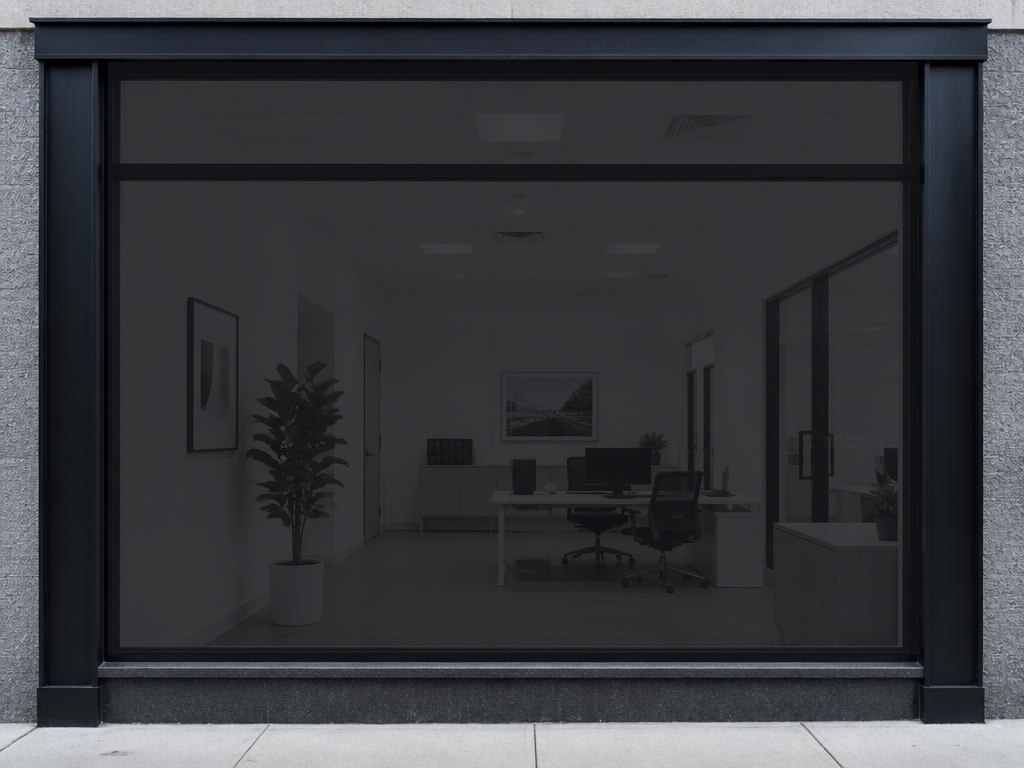
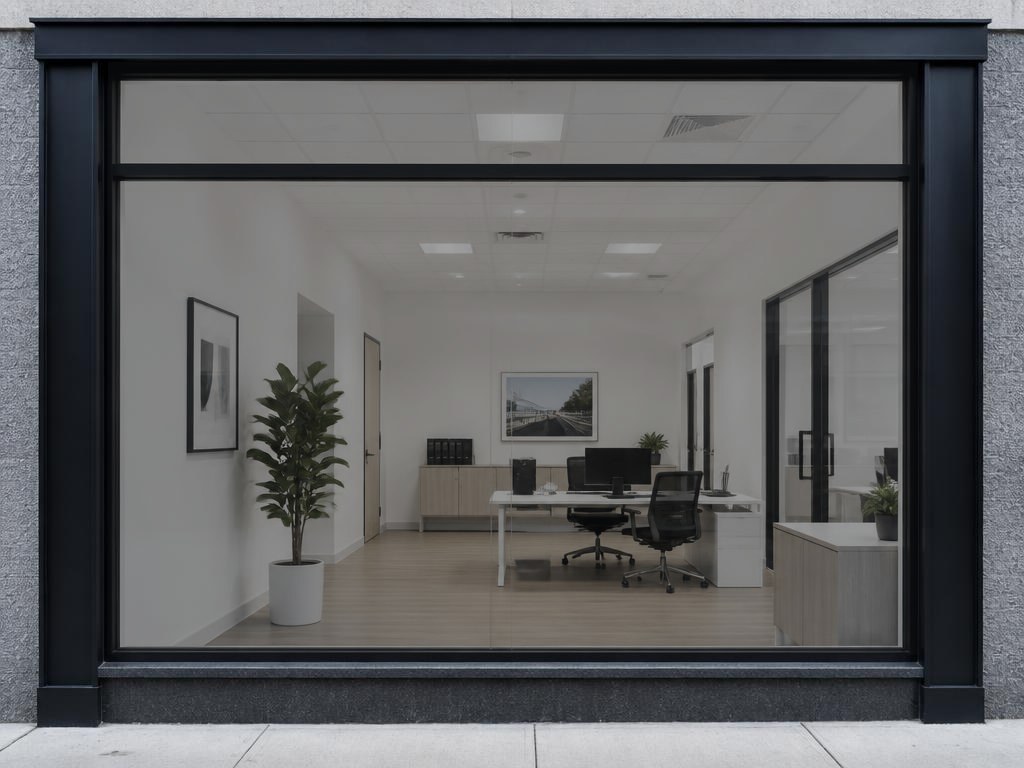
35% VLT — Corporate Neutral
The most common office specification. Cuts glare and heat noticeably while keeping a professional, neutral appearance from both sides of the glass.
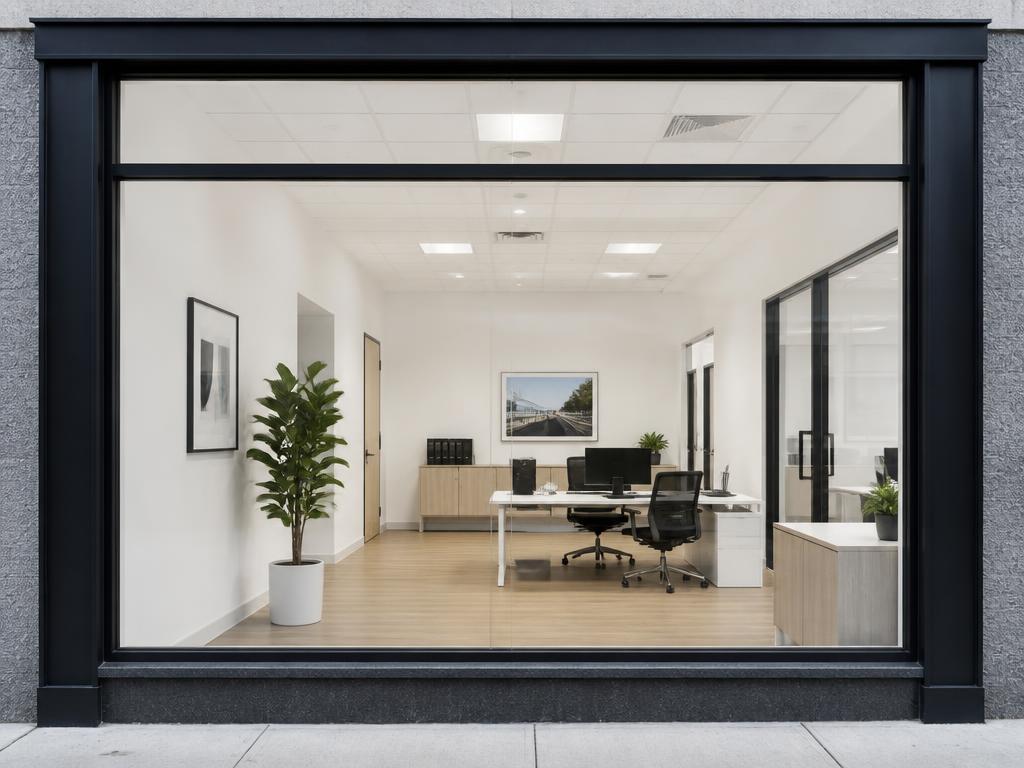
Every tier is the same scene, shot under the same daylight, so the difference you see is the film — not the lighting.
These VLT tiers match what you'll see on our Commercial Window Tinting and Anti-Glare Film pages — same product lines. This page just frames them around the heat and privacy decision specifically.
Film Options for Commercial Glass
Three tiers, matched to your exposure, glass type, and how much the building's appearance can change.
Solar Neutral & Night Vision Series
Balanced heat rejection in the 50–70% infrared range with a soft charcoal finish and strong night-time view-out. The right call for multi-tenant office buildings that need one consistent look across the whole facade.
Dual-Reflective & Privacy Series
75–85% infrared rejection paired with true one-way daytime privacy. This is our primary recommendation for storefronts and ground-floor offices, where controlling sightlines matters just as much as controlling heat.
Prestige Nano-Ceramic Series
90–97% infrared rejection with a near-invisible appearance and fully non-metallic construction, so it won't interfere with WiFi or building security sensors. The choice for historic facades and high-end glass where altering the building's look isn't on the table.
One-Way Daytime Privacy, Explained
Reflective film creates a one-way mirror effect during the day for one simple reason: it's brighter outside than inside. Light bounces off the exterior surface before anyone standing on the sidewalk can see past it, so your staff and interior stay out of view while your team still gets a clear look out.
That effect reverses at night. Once interior lights are on and it's darker outside than in, standard reflective and solar film does not provide privacy after dark — the mirror flips.
For a storefront or ground-floor office that needs privacy around the clock, the answer is to pair solar film with a frosted or decorative layer on the glass that matters. That combination gives you heat rejection all day and a fixed visual barrier at night. See Office Privacy & Frosted Graphics for how we spec it.
Film vs. Glass Replacement
Before a capital glazing project gets approved, this is the comparison that decides it.
$8–$22 per Square Foot, Installed
That's the typical range for professional commercial film, varying with film series, glass access, and job size. Full glass and frame replacement can exceed $100 per square foot on the same building.
2–5 Year Payback
Reduced cooling load usually pays back a film project within two to five years. A full glazing replacement typically takes 15 years or more to reach the same point on energy savings alone.
Evaluated First, Not Last
The gap is wide enough that film is almost always the first option a property owner should price before committing to a capital glazing replacement project.
Installation & Warranty
Every Solar & Privacy Film installation follows the same certified process and carries the same lifetime warranty coverage as the rest of our commercial film work — see our Commercial Window Tinting page for the complete installation standard and full warranty breakdown.
FAQs
Solar & Privacy Film Questions
How is this different from Commercial Window Tinting?
Commercial Window Tinting is the general overview of every commercial film option we install — solar, security, privacy, decorative. This page goes deep on just two of them: heat rejection and daytime privacy, which are the two reasons most property owners start comparing film in the first place.
Does solar film provide privacy at night?
No. Reflective and dual-reflective films work on a light differential, so they deliver one-way privacy only while it's brighter outside than inside. Once interior lights are on after dark, the effect reverses. For round-the-clock privacy, pair solar film with a frosted or decorative layer.
What SHGC should I target for my building's climate zone?
California's 2026 Title 24 code targets an SHGC of 0.23 or lower for new and replacement commercial glazing in most Southern California climate zones. Window film isn't itself Title 24-certified the way a manufactured window is, but professional film is a widely used way to meaningfully improve existing glass toward that target without a full glazing replacement.
Will the film interfere with WiFi or building security systems?
Not if the right product is specified. Metalized films can attenuate signal; nano-ceramic films are non-metallic and signal-safe, which is why they're our default recommendation for connected buildings and alarmed glass.
Can solar film be combined with security or anti-graffiti film on the same glass?
Not stacked on the same pane, but the same building can absolutely mix specs — solar film on upper floors and security film or anti-graffiti film at street level. There are also combination products that deliver solar performance and safety thickness in a single layer; we spec those where the glass calls for it.
How long does a typical commercial installation take?
Most storefronts and single-suite offices finish in a day. Larger buildings are phased floor by floor, often after hours or on weekends, so your operation never pauses. You get a written sequencing schedule with the proposal.
Can this be applied over existing tinted or reflective glass?
Often yes, but it depends on the glass makeup. Already-tinted, Low-E, and dual-pane assemblies absorb more heat, which raises thermal-stress risk if the wrong film is applied. We identify the glass on site and spec within the manufacturer's thermal-stress guidelines to keep both warranties intact.
Related Services

Commercial Window Tinting
The full overview of commercial film — installation standard and warranty detail.
Learn More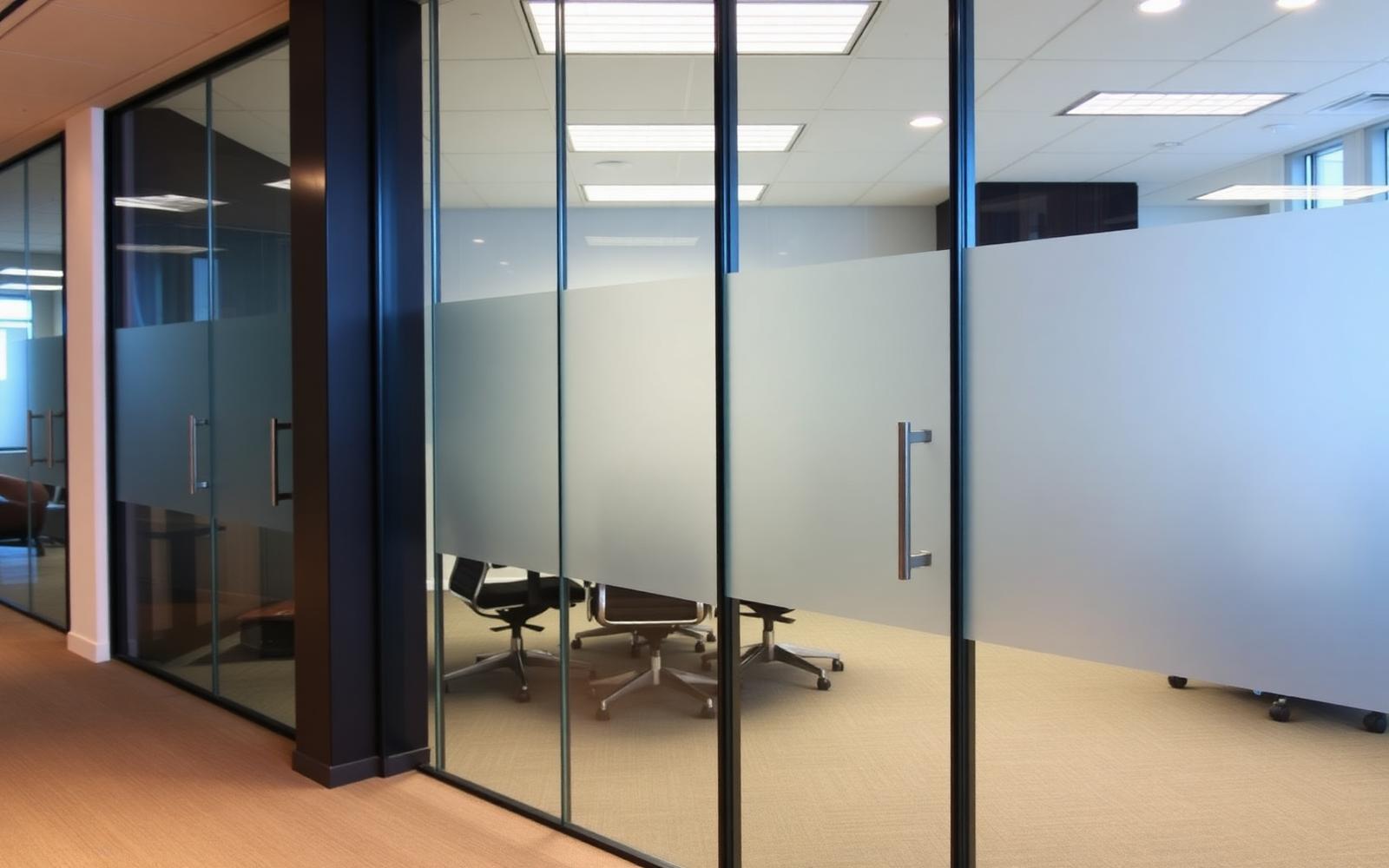
Office Privacy & Frosted Graphics
Frosted and decorative film for 24-hour privacy that solar film can't provide.
Learn More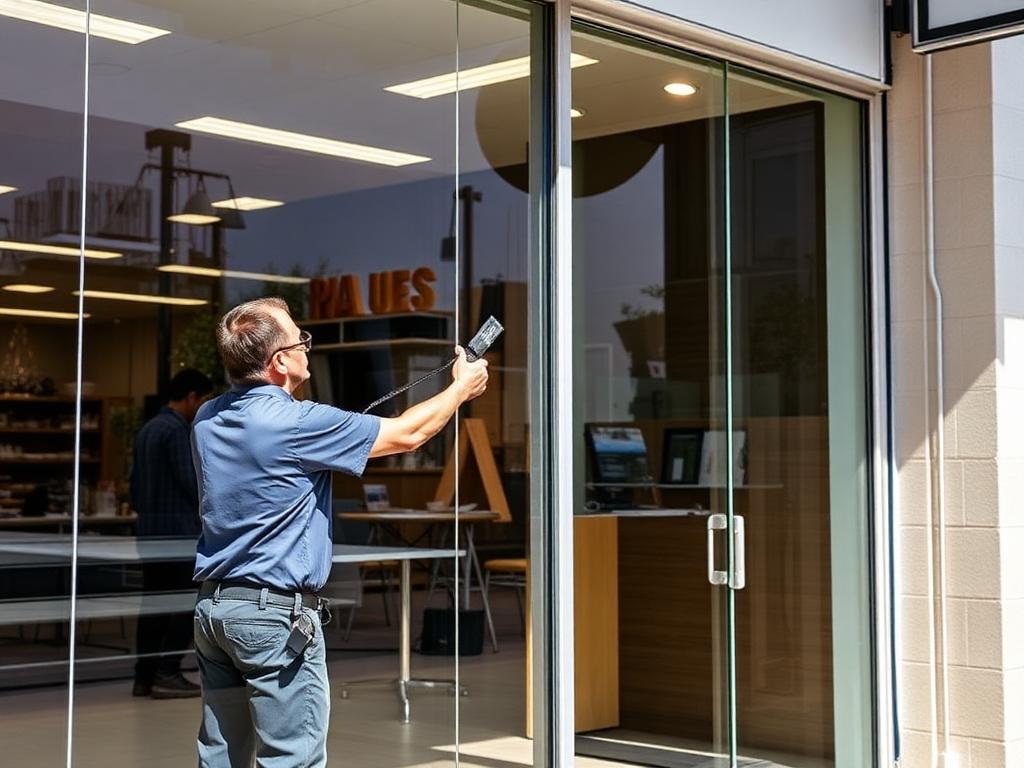
Commercial Security Film
Thick, anchored safety film that holds shattered glass in place and delays entry.
Learn More
Anti-Graffiti Film
A sacrificial clear layer that takes the etching and tagging so your glass doesn't.
Learn MoreGet a Free Commercial Estimate
On-site glass survey, film samples in your own light, and a written proposal — across Orange County and Los Angeles County.